
Heads up – this blog is a bit of a heavy one folks!
Phnom Penh. Phnommers, as Alpa probably called it at one point. Our first stop in Cambodia! It was a long day of travelling to get there, featuring a bus driver trying to scam us out of a dollar at the border (we escaped it by acting oblivious, and we got lucky – some people had to hand over $10 so the bus didn’t leave without them!) We arrived at our hostel, Billabong, which was a small slice of luxury with a nice pool and social areas.
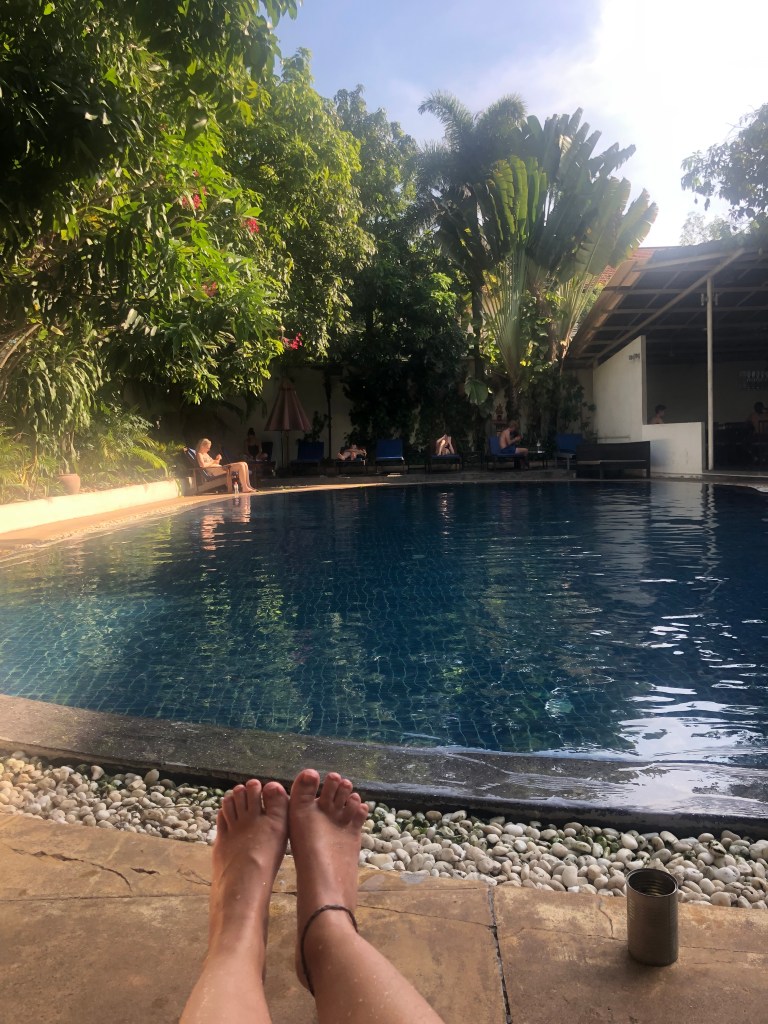
We were delighted to be reunited with loads of pals – Karima, Nelson and Luis who we met in Vietnam, and Connie and Lyra who we met waaaay back in Laos were all staying at our hostel! So after an evening of catch ups and card games, we hit the hay.
Our second day isn’t really worthy of much blog space, other than to say we spent the ENTIRE day on sunbeads by the pool, drinking beer, eating… it was nice. However we did venture out in the evening for our first taste of Cambodian food – we found a lovely family-run restaurant, with the most adorable little toddler who kept running over to our table. Chloe tried a traditional Amok fish curry, and I had a red curry.
S21
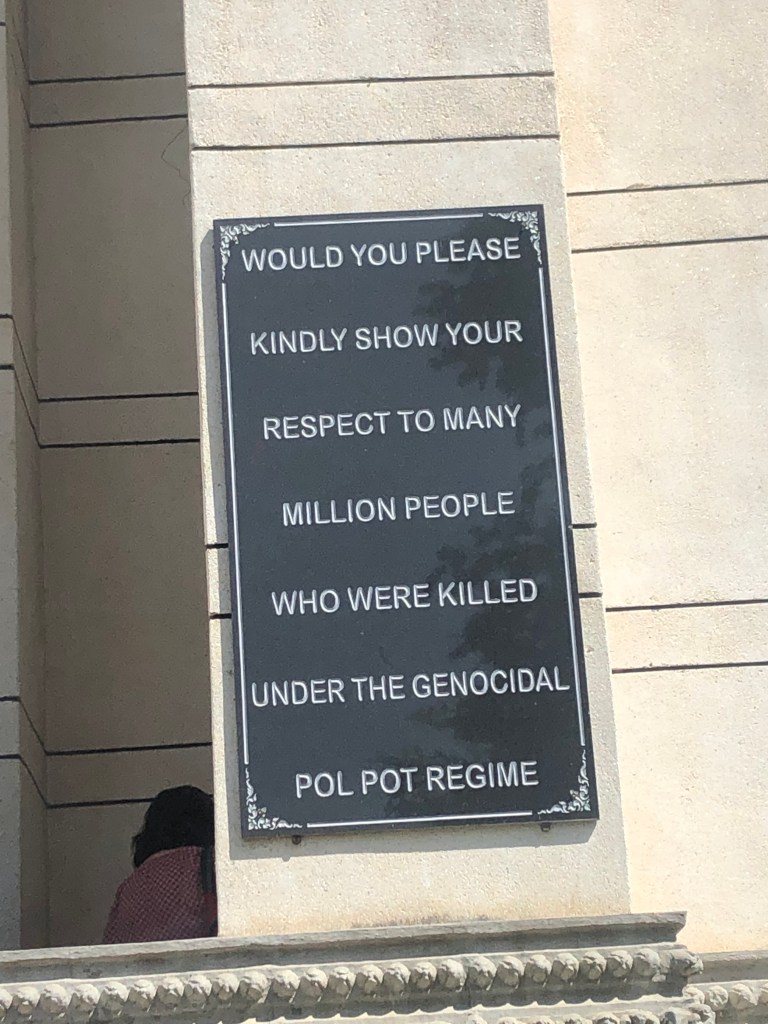
The next day we were up early and ready to tackle what was inevitably going to be a very difficult day. We took the hostel organised bus on the trip to S21 Prison and The Killing Fields. The Cambodian Genocide was carried out from 1975 to 1979 by the Khmer Rouge Regime, under leader Pol Pot. The figures of those murdered are unknown, but its estimated that around a quarter of Cambodia’s population were wiped out – including anyone with religious beliefs, from other countries, and anyone from an educated background who may threaten the dictatorial regime – including doctors, lawyers and teachers. I knew a little about the genocide having done some research prior to the trip, and reading the book ‘First They Killed My Father’ written by a genocide survivor. However myself, and most people we encountered, had never learned about what happened in Cambodia prior to researching for this trip. In the UK we really aren’t taught anything about Asian history in schools, so it seemed even more important to take this opportunity, while in Cambodia, to learn all we could about their very recent and tragic history.
Our first stop was the S21 Prison Camp – a former school, turned into a prison and place of torture during the Khmer Rouge Regime. We got an audio guide and followed it round the various buildings. We learned of the atrocities committed here – the acts of torture and imprisonment that took place. In some rooms there were hundreds, maybe thousands, of photos that were taken upon people’s arrival at the prison, then discovered when the Vietnamese invaded in 1979 and closed the prison. Some rooms, which were former classrooms, had makeshift brick and wooden cells, and although it still looked like a school in areas, the barbed wire was a cruel reminded of what occurred here.
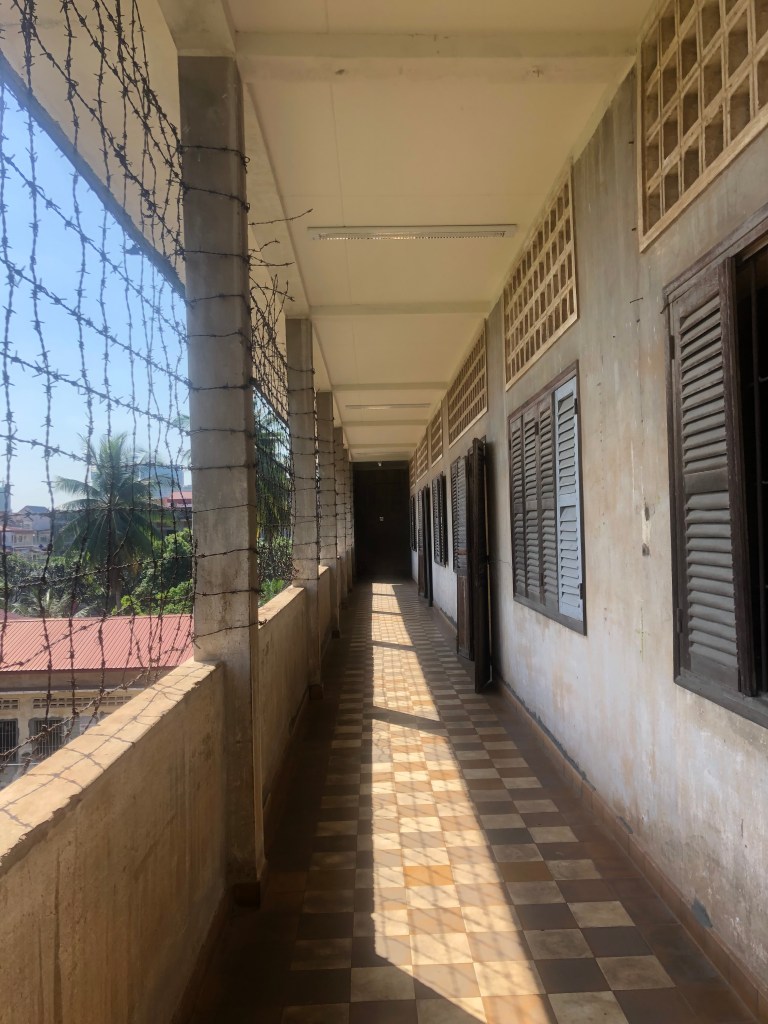
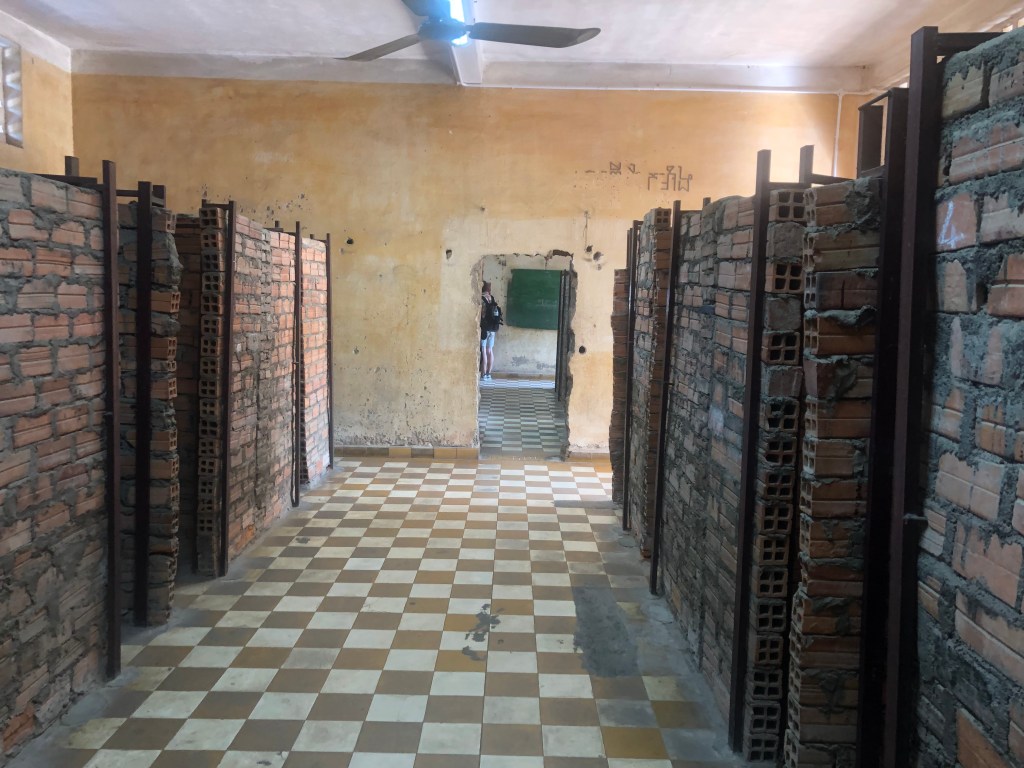
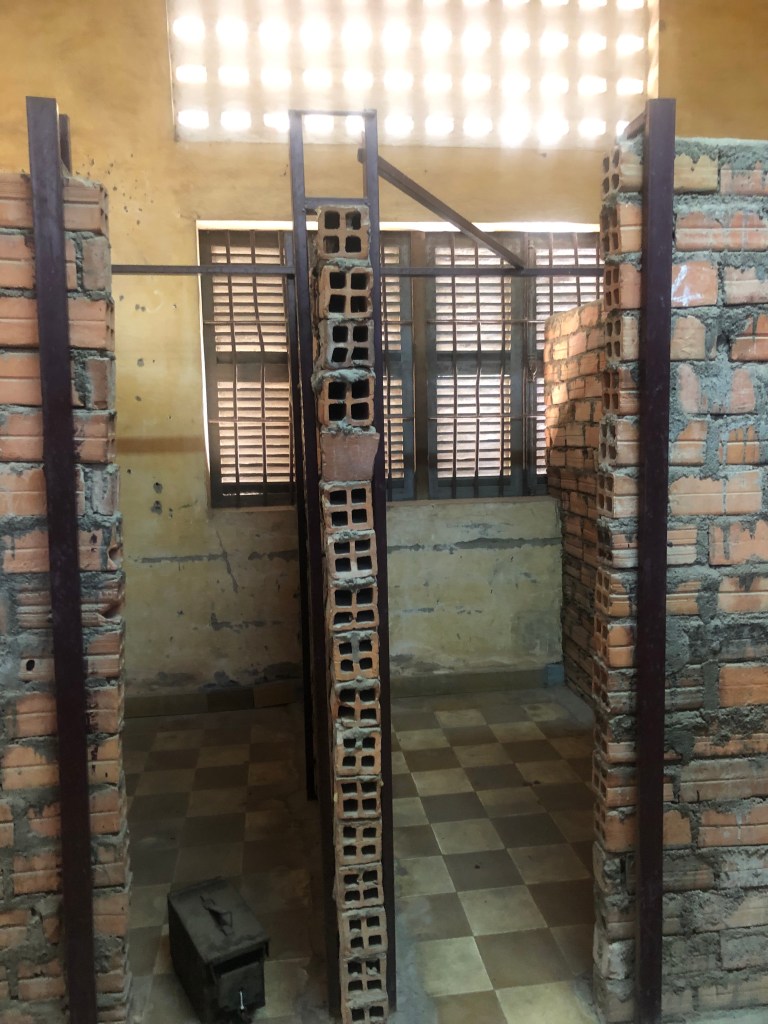
I don’t have many statistics in numbers, but I did read that of the 12,000 (approx.) people that went to S21, there were only 12 survivors. It was a very chilling experience.
The Killing Fields
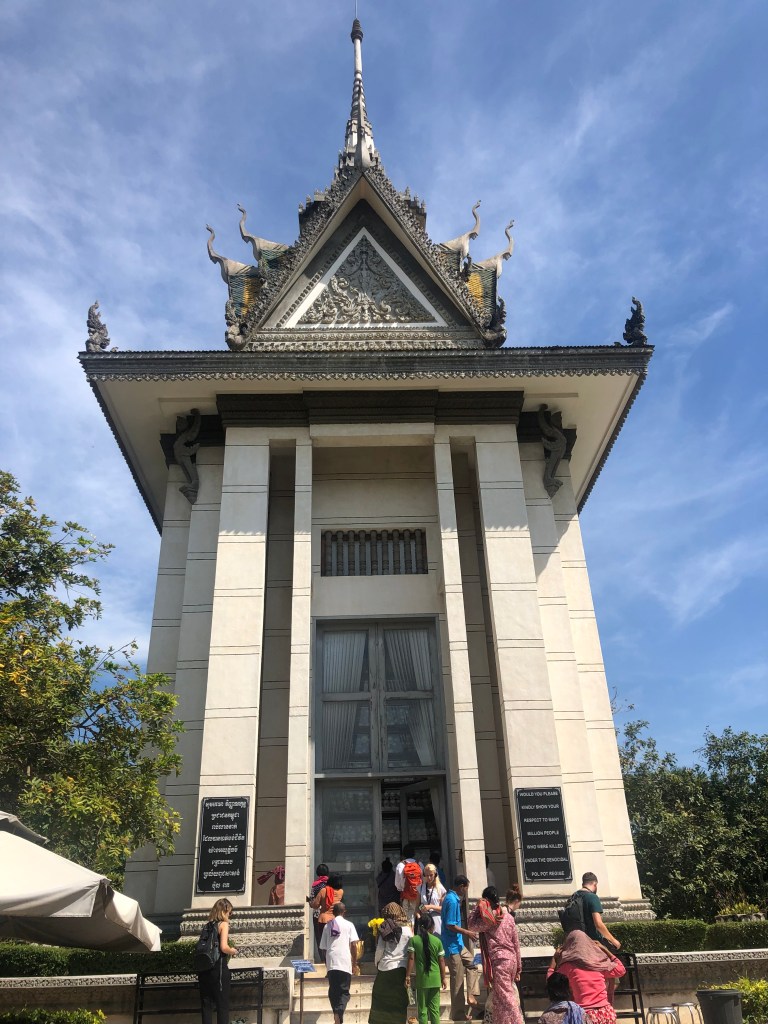
Next we went to visit The Killing Fields, located outside of the city. We discovered this was one of many Killing Fields across the country, and is now the site of a memorial to all those who lost their lives there. It was a bright, sunny day, and the field – which had been left to grow – had trees, flowers, and butterflies; it was quite hard to process how something so awful could have occurred there less than 40 years ago. The audio guide took you around various notable sights, and there was a section with personal stories that you could listen to as you walked around the lake. I found a peaceful spot to stop and listen, and try and take in some of these terrible and inspiring stories from survivors.
There were several mass graves on the site, most just a small plot of land surrounded by a small wooden fence. People had left bracelets all over the fence as a sign of solidarity. The whole day we were constantly choking back the tears, but this particular site made it very had to control my emotions.
We also saw the killing tree, and learned that the Khmer Rouge did not use weapons to kill people as the bullets were too valuable, instead they would use blunt objects, or in many cases they would hit people’s heads against the tree. Once again, people had left bracelets on the tree as a mark of respect.
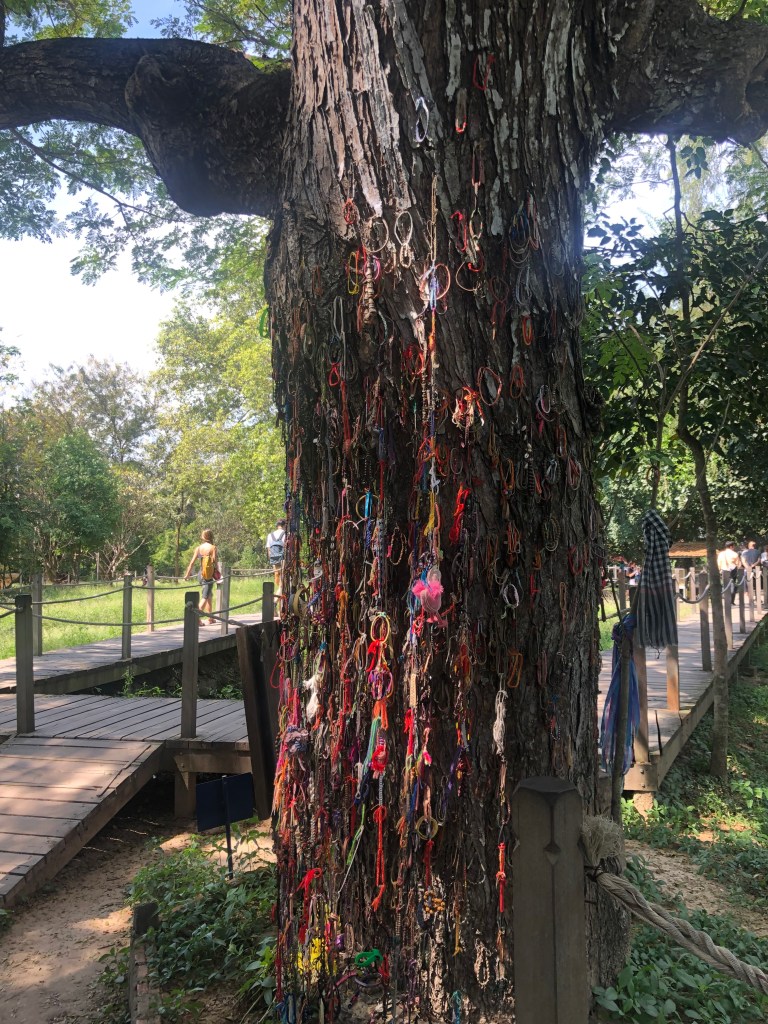
Another devastating thing we learned is that fragments of bones and teeth still appear from under the earth almost every week on the site – and visitors are told to alert staff if they discover anything.
Its also unbelievable to think that any Cambodian we meet who is over 40 has been directly affected by the Genocide, and those younger than that are the first generation since the country started to rebuild itself.
It was a truly horrific and humbling experience – even writing about it in retrospect is quite upsetting. But its also something that needs to be visited by everyone who visits Cambodia. The audio guide acknowledged that this is not the only genocide that has occurred in modern history – of course we have all heard of the Holocaust, but there is also Rwanda, Armenia, Bosnia, and many others. It also noted that there will be more – Southeast Asian country Myanmar had a genocide in late 2016. It seems as a human race we will always find ways to torture each other in the pursuit of power.
I think the Cambodian Killing Fields serve as a good tribute to those who lost their lives there, whilst providing a harsh reminder of what happened there less than 40 years ago.
Rooftop views and New Friends
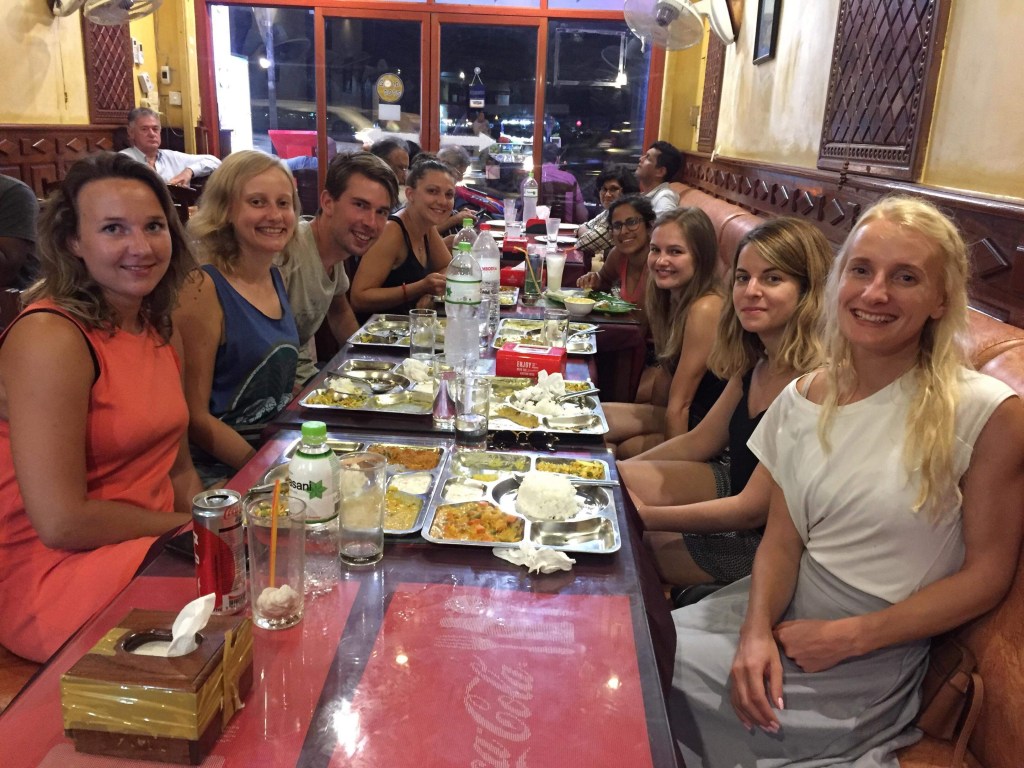
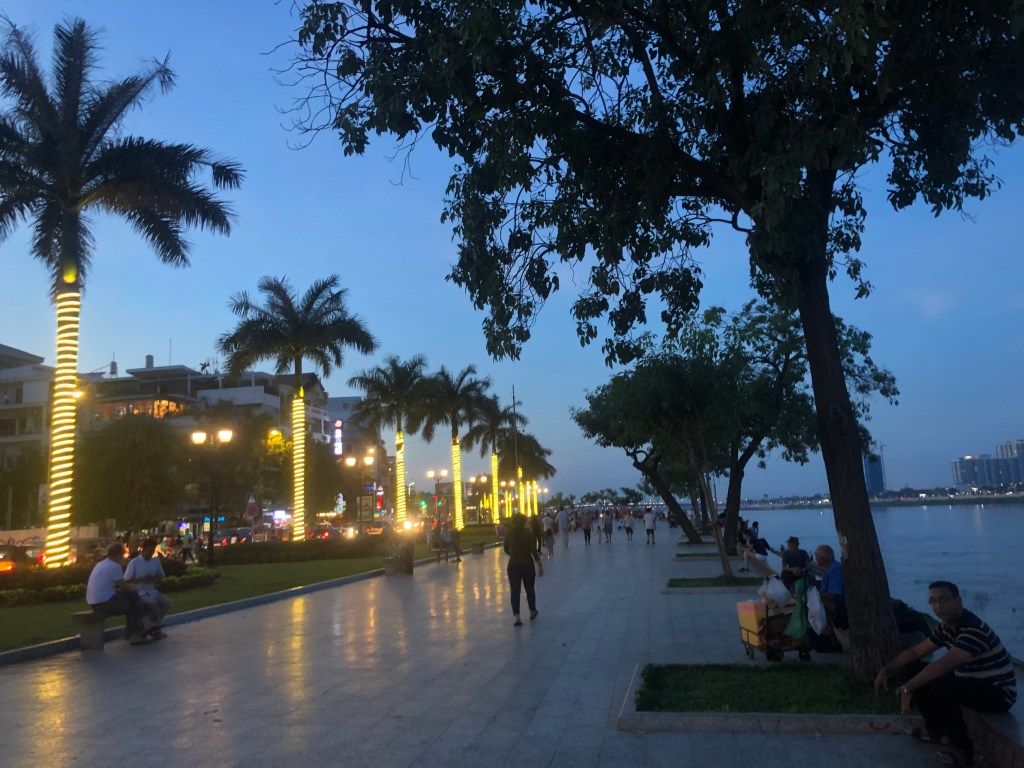
We spent that evening processing what we had seen, and after some time exploring the town by night, we found a rooftop bar where we happened to bump into some friends from our hostel. After soaking up the views of the city, we headed to an Indian restaurant together for some great food, before deciding we had had enough of today!
The Grand Palace
On our last day in Phnom Penh, we decided to visit the Grand Palace with our new pals Alice and Sjoerd. We got there early to try and avoid the crowds, but the tour groups were swarming the grounds already. What we didn’t realise was that the entry was $10 – but we were there so we paid it and went it. We saw a great selection of temples, including the Silver Pagoda and the Emerald Buddha.
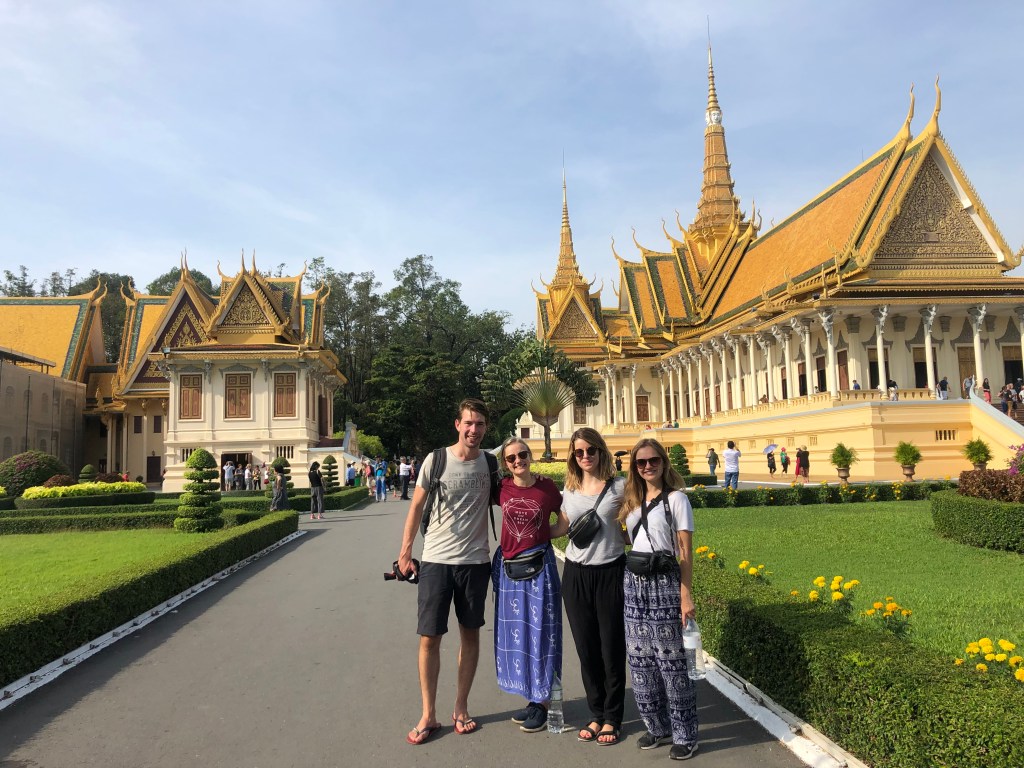
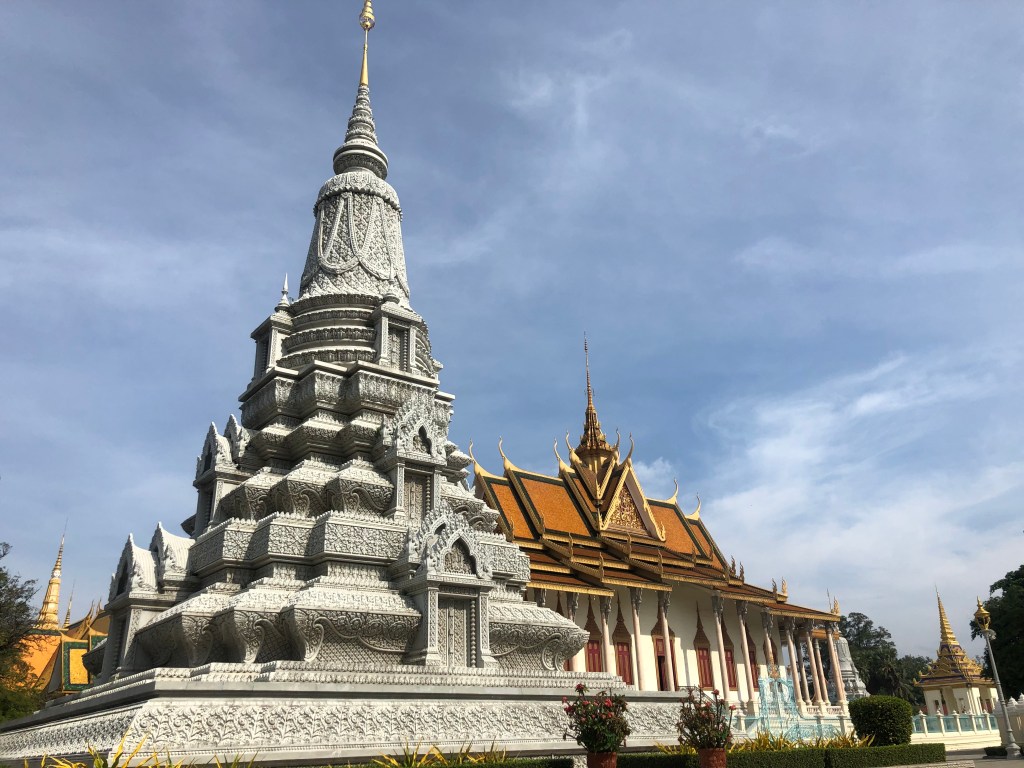
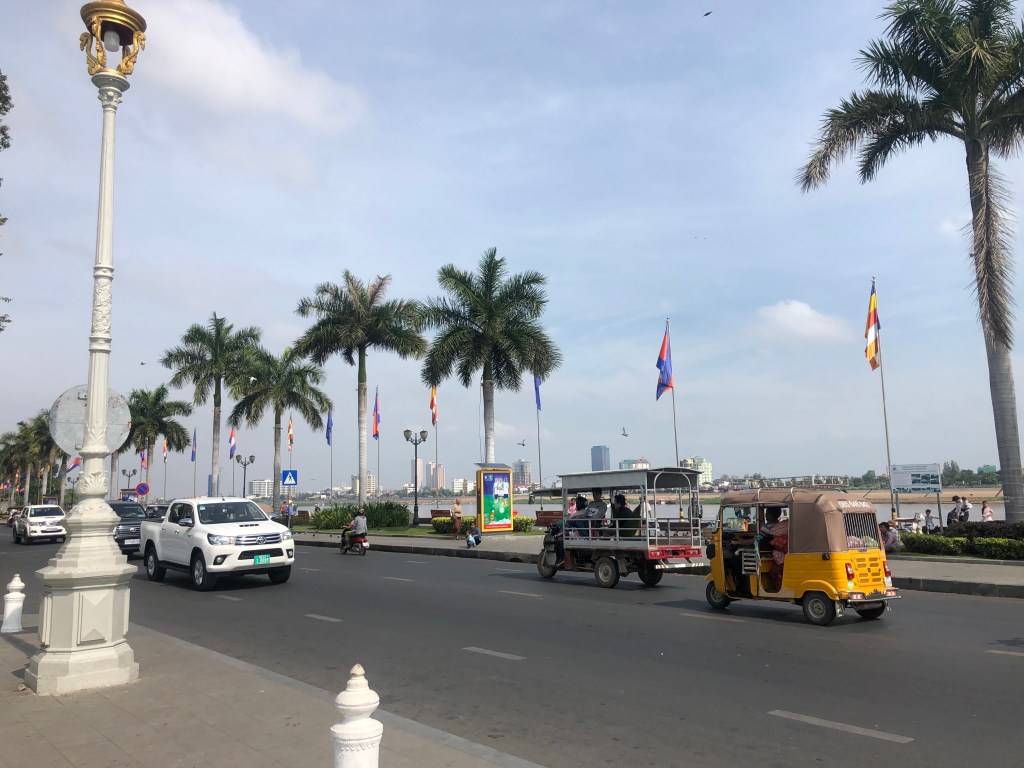
As we left the Grand Palace and headed onto our lunch spot, Chloe and I thought this area here by the river was actually quite reminiscent of Brighton (with the added Palm Trees and Tuk Tuks!)
Daughters of Cambodia
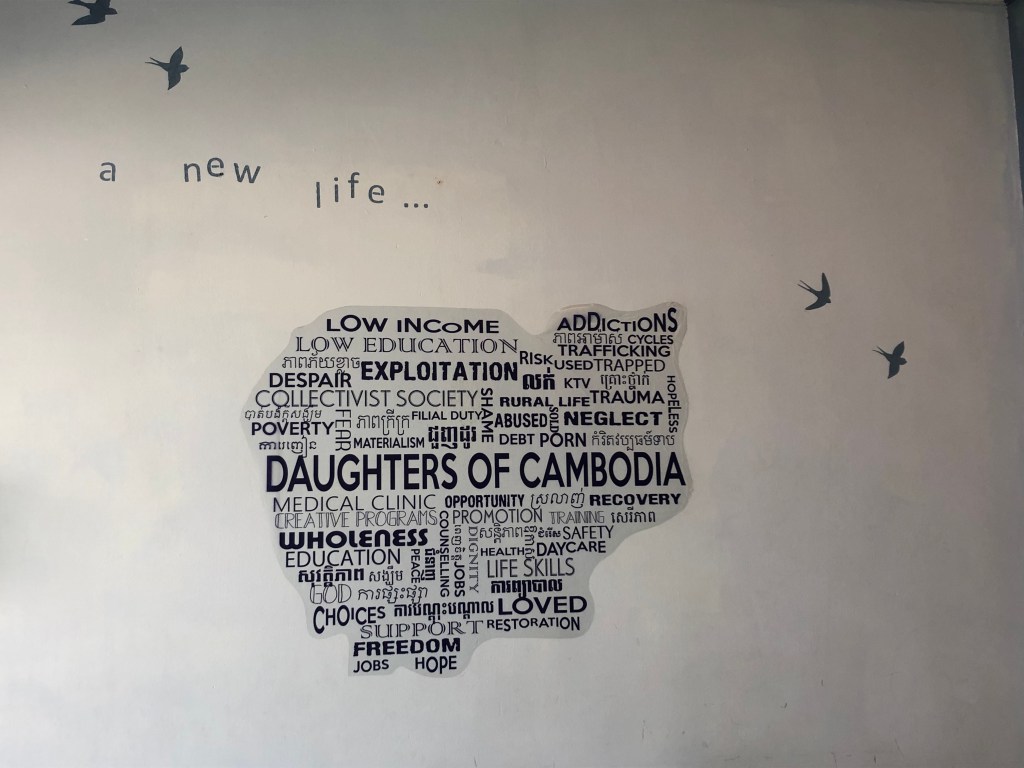
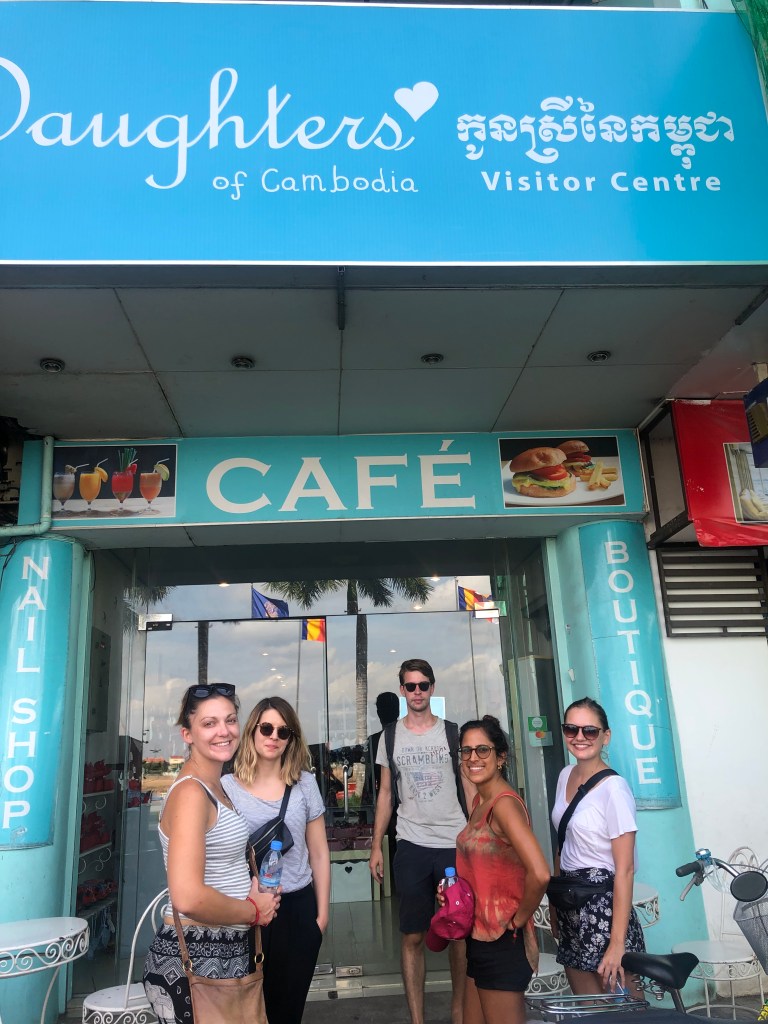
After this we went to visit one of the many NGOs in Phnom Penh, a restaurant, spa and shop called Daughters of Cambodia. The charity was formed to offer women a way out of the sex trade. We learnt that 1 in 40 women in Cambodia end up becoming sex workers, particularly in places like Phnom Penh. Often their families force them into it as a way of making good money, and once in the trade it is very hard to get out. Daughters of Cambodia offers training in a multitude of skills, including working in their restaurant, shop, craft store and spa. They give women the skills they need and pay them a wage – not as high as they earn in their previous trade – but it gives them a chance to rebuild their lives. The women that worked there were very welcoming and friendly, and gave great service.
Pool Fun
Our last few hours in Phnom Penh was spent back at the hostel in the pool playing ball games with everyone, before realising time had flown and we only had 15 minutes to get showered and ready for our bus! We made in by the skin of our teeth, and once again we were on the road, heading to the land of pepper – Kampot!
Phnom Penh was by no means my favourite city of the trip, I didn’t really warm to the city itself. However the people we met – both backpackers and Cambodians, are what made this place special. It was as difficult as I was expecting to learn about their brutal history, but I’m pleased to have done it on our first stop in Cambodia, as it’ll allow us some time for reflection as we travel the rest of the country.
Annie x
 Pint-Sized Adventurers